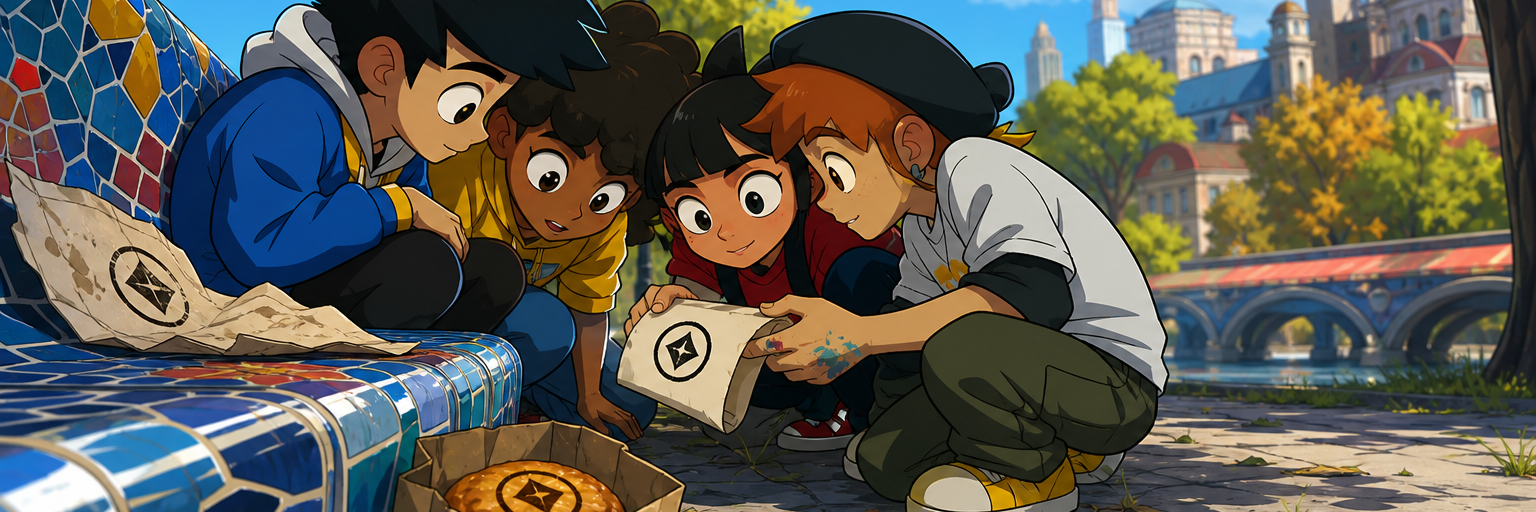
Patchwork Promenade is leaking a secret. A cracked stamped brick coughs up a rolled time-capsule note and six kids have less than a day to follow a three-zone puzzle trail before the neighborhood’s big celebration sweeps the last clue away. From the bakery’s warm fogged window to the mural-streaked corridor of Gasket Alley, across the rooftop sproutery and through Grout & Glue Makerspace, every tile, stamp, and mailbox hides a hint — if you know how to look. Nico, paint-splattered and impossibly observant, reads murals like maps. Asha, grease-stained and always building, turns scavenged scrap into the exact gadget the plan needs. Together with four other neighbors — a map-loving librarian’s kid, a quiet code-cracker, an errand-running courier, and a deaf skater whose silence speaks in gestures — they race the clock, trading strengths, jokes, and a few near-misses. Fast chapters hit like small fireworks: a clue spotted, a red herring unmasked, a pulley jammed and then freed. Humor never bites, suspense never terrifies, and the prize isn’t glory but belonging earned by showing up as yourself. The Cracked Tile Countdown is a cozy, crackling adventure that celebrates neurodiverse smarts, teamwork, and the hidden history stitched into every city sidewalk.
A crew of six kids in a lively riverfront neighborhood uncover coded clues hidden in mosaic sidewalks, alley murals, bakery pastries, and rooftop gardens. Each fast-moving episode blends logic puzzles, humor, and genuine teamwork. The series champions neurodiversity, mobility inclusion, and multicultural community life without making any of it feel like a lesson.
- Setting
- A compact, walkable riverfront neighborhood in a mid-sized city packed with mosaic sidewalks, winding mural alleys, rooftop gardens, a community makerspace, a riverfront bakery, a pocket park, communal mailboxes, and a small branch library annex. Every block holds a hidden clue.
- Time period
- Present day, contemporary urban life.
- Audience
- Children ages 7 to 10 who enjoy action-packed puzzles and humor; caregivers and parents seeking inclusive, multicultural stories; classroom teachers and school librarians running read-aloud or independent reading programs; kids who identify as neurodivergent, use mobility aids, or come from blended or non-traditional families and want to see themselves as the hero.
Theme
Every kid brings a unique skill the group cannot solve the puzzle without — belonging is earned by showing up as yourself.